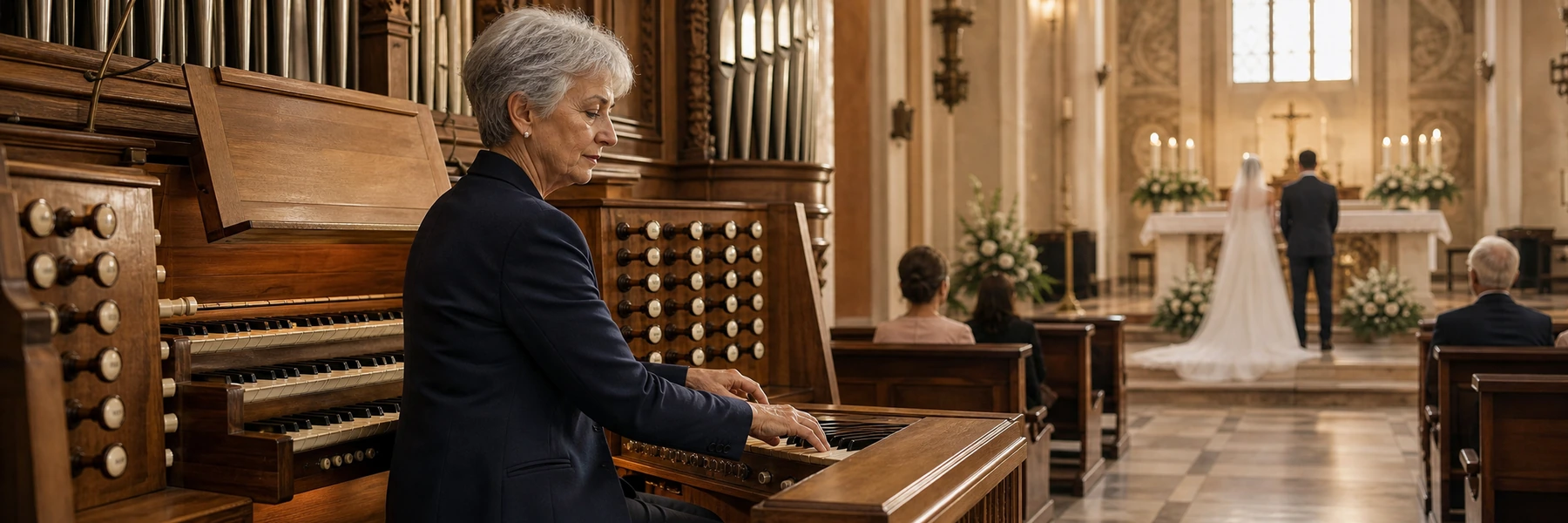
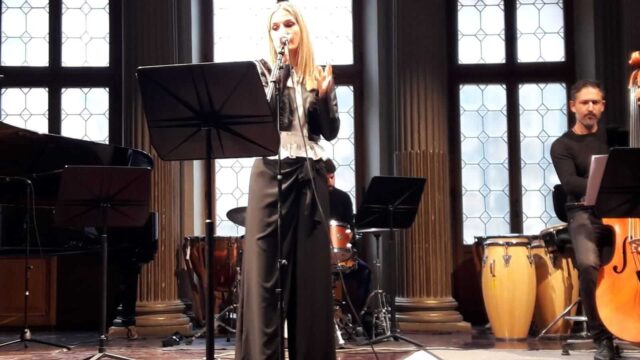
Theorganist for wedding gives to church ceremony a breath that belongs to the place: theorgan accompanies the entrance, supports the songs, protects the silences and makes the exit of the spouses more intense without turning the ritual into a show. Here the choice is not only about the musical taste, but the relationship between liturgical repertoire, celebrant, acoustic, instrument available, possible item or choir and celebration moments, with trials and authorizations agreed in time. A right passage, at the right point, can remain in memory as a prayer said really well. The righteous organist does not fill the church: he makes it sound in moderation, solemnity and truth.
Wedding Organizer: The Natural Sound of the Church
Theorganist for wedding is the most coherent choice when the ceremony takes place in church The organ supports the entrance, accompanies the songs, gives order to offerr, communion, signatures and exit, without turning the celebration into concert. Its strength is not only solemnity: it is the ability to follow the real times of the celebrant, readers, spouses and assembly. A good organist knows when to fill the nave and when to leave space at the sacred moment. The choice must be linked to the sequence of the day: ceremony, aperitif, dinner, cake cutting and party require different intensity, duration and stage presence.
Music in church for wedding: repertoire, liturgy and authorizations
The music in church for wedding Some moments have a precise liturgical function: entrance, psalm, alleluia, offering, saint, communion, signatures and output do not ask for the same type of song. The celebrant or parish can indicate what is admitted, what should be avoided and where music can enter. Mars wedding, Hail Mary, Bach, Pachelbel, Handel, sacred songs and modern songs should be evaluated according to the context. The taste of the spouses counts, but must dialogue with the ritual: otherwise the beautiful song becomes out of place. Always listen to live evidence or credible recordings, because repertoire, management of pauses and ability to read guests of different ages are worth more than a list of very long songs.
Marriage organ: real instrument, acoustics and accompaniment
Thewedding organ It depends on the instrument available: pipe organ, electronic organ, parish keyboard or instrument brought by the musician produce different results. It also counts the acoustics of the nave, the position of the console, the distance from the choir or the singer, the presence of microphones and the state of maintenance. If there is a voice, a violin or a choir, shades, scores and points of entry must be prepared first. A short test or at least a technical comparison with the church avoids unbalanced volumes, uncertain attacks and endings closed badly. In the quote ask for actual lineup, implant, microphones, lights, assembly times, internal movements, extra hours and coordination with venue, catering, photographer or wedding planner.
Quote for wedding organist: songs, rehearsals and coordination
In the budget for a wedding organist The ceremony, repertoire, songs on request, rehearsals, any accompaniment of singer or instrumentalist, reading of the scores, arriving in church and coordinating with celebrant or parish. Ask if the organist already knows the instrument, if it is necessary to examine it, if it can use an alternative keyboard and how any changes of the program are managed. We must also clarify compensation, transfer, SIAE if relevant and time to deliver the songs. The music in the church seems simple only when it has been prepared well. If wedding organist does not solve every moment, evaluate a combination with soloists, DJs, ensembles or technical support: often the best solution comes from different and well coordinated roles.