
Search for a word or filter by target audience and topic.
Online artist profile: what to write to attract enquiries
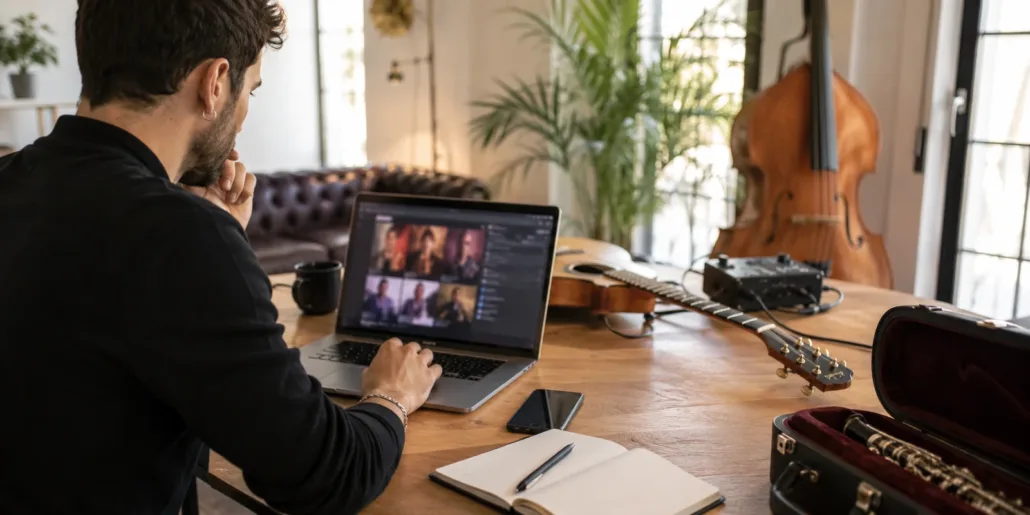
An effective online artist profile must make it clear within a few seconds whether the service is suitable for the event. People looking for a musician, a band or a DJ often compare several options on their mobile phones: they scroll through the title, photos, opening lines and videos, then decide whether to look further or move on.
There’s no need to go into your entire career straight away. It’s better to show what you offer today, the contexts in which you work, and how the service is provided. A clear profile not only attracts more enquiries: it reduces unsuitable enquiries and makes it easier to provide an accurate quote.
An online artist profile is not a CV
Qualifications, collaborations and experience are valuable, but they are rarely the first things a client looks for. A couple planning a wedding wants to know if you can provide music for the ceremony, play during the pre-dinner drinks, manage the reception and supply the sound system. A company wants to know if the format is suitable for a dinner, a conference or a product launch.
So start with the service, not the biography. “Acoustic trio for ceremonies and pre-dinner drinks” or “Wedding DJ providing music during the reception and a closing set” immediately set the tone for the reader. Your artistic background can follow, selecting only those elements that reinforce your offering.
Also avoid abstract introductions about a passion for music. The client takes it for granted that a professional loves their work; what they don’t yet know is how that expertise will translate into their event.
Title and slogan: clarity above all else
The title often appears before the description. If the stage name doesn’t explain what the service is, add a specific description alongside it: “Luca Rossi – DJ for weddings and private parties” conveys more than just a name on its own.
The slogan should also provide some concrete information. “Emotions through music” could apply to hundreds of profiles; “jazz and swing for aperitifs and dinners” or “party band with a pop, soul and dance repertoire”, on the other hand, help the reader to picture the atmosphere and the time of day.
Don’t try to cram every genre, region and format into the title. The first line is there to set the scene; the details belong in the description. If you try to say everything straight away, the result will be confusing and hard to remember.
Description: what you do, who it’s for, how you work
The description should answer three questions: what service you offer, what sort of events it is designed for, and how it is organised. Start with the main offering and then move on to any additional options.
For a wedding, you could explain that you perform as a duo during the ceremony and the pre-dinner drinks, with a larger line-up available for the reception. For a corporate event, you can specify the duration of the set, the space required, the volume, set-up times and the option to use a microphone for scheduled speeches.
Only include your repertoire, set lengths, breaks, equipment and any specific requests where these help to clarify the service. “Three hours of music” can be ambiguous: make it clear whether this refers to the total time you’ll be there or the actual performance time spread over several sets.
If you’re working with other musicians or technicians, make it clear who will actually be present. A client who sees a quartet in the videos shouldn’t find out from the quote that the basic package is actually for a different duo. The same applies to sound equipment, lighting, microphones and music during breaks: what’s included should be clearly distinguished from what requires additional set-up.
Photos and videos: showcasing real-life contexts
The images must back up what you’ve written. A photograph taken at a wedding, showing the guests, the attire and the venue décor, speaks volumes more than a studio shot when you’re looking to attract enquiries for weddings. For the corporate market, it’s useful to show tidy surroundings, a stage, an audience and how the event fits into its context.
Videos must give a true sense of the actual performance. A well-put-together showreel can introduce the project, but you also need clips where the vocals, instruments and the audience’s reaction can be heard. A band should show at least part of a continuous performance; a DJ, their handling of the dance floor and not just the mixing desk and lights; a solo artist, the actual set-up they are proposing.
If you use backing tracks, loops or pre-recorded accompaniments, don’t hide them. They aren’t a bad thing, provided the client understands what they’ll be hearing. Photos, videos and descriptions must all relate to the same service, without creating expectations that the quote will subsequently fall short of.
Areas covered, prices and practical information
Please specify the areas where you actually work. Listing very large areas may result in requests that are difficult to fulfil in terms of time and travel. It is more useful to distinguish between your usual area and areas that are accessible, subject to certain conditions.
It is not essential to publish a price list, but it is worth explaining which factors determine the quote: duration, number of performers, equipment, distance, timing, set-up and performances in multiple venues. This helps the client understand why two different set-ups for the same project may have different costs.
Include any information that affects the organisation. How much space will you need? How early do you need to arrive? Do you need electricity, a stage or a canopy in case of rain? Can you only use the venue’s facilities once they’ve been checked? A few specific details will help avoid agreements based on assumptions.
If you work between Italy and Ticino, you can specify the areas covered, the languages to be used, the currency for the quote and the travel arrangements, leaving any tax or administrative matters to the relevant authorities to sort out.
Common mistakes that make a profile less effective
The first mistake is trying to please everyone. Phrases such as “suitable for any event” and “a 360-degree repertoire” blur the distinctions between different profiles. It’s better to state where you excel and which requests fall outside the scope of your service.
Another problem is leaving old or inconsistent content online: changes to the line-up, videos featuring musicians who are no longer available, areas you no longer cover, or outdated equipment. Reviews also lose their impact when they remain too general. The most useful testimonials highlight punctuality, how the day is organised, the relationship with guests, and the ability to adapt to change.
Finally, make sure the customer knows what to do next. On Lyrium, you can start from the Lyrium Membership and Registration page or use Access for Artists and Professionals to update the record.
Before you consider the work finished, reread the profile as if you were someone who doesn’t know you. Can you grasp the services, contexts, training, geographical area and facilities within a few seconds? If any of these points remain unclear, there’s no need to add more text: often, it’s enough simply to move the key information to the first few lines and remove anything that doesn’t help the reader make a decision.