
Category: Artists and Professionals/Service
Ensemble
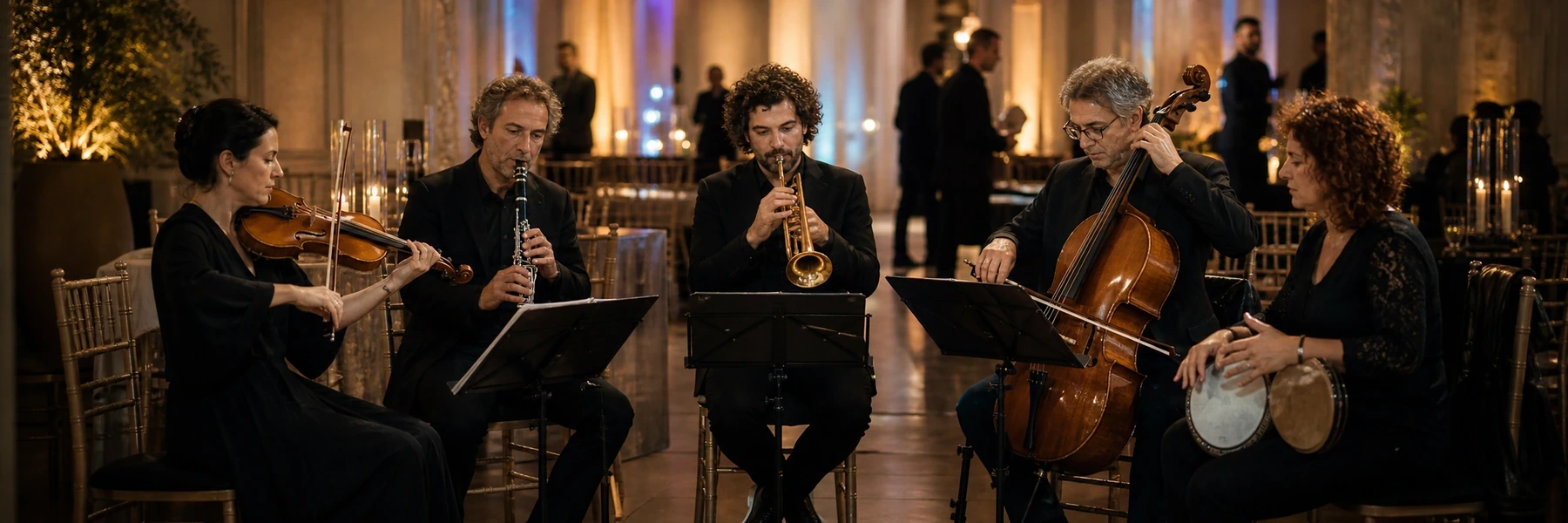
A music ensemble for events It is the right choice when music must have body, balance and a more built presence of the single soloist. Archies, winds, choir, big band, brass band, chamber orchestra, percussion or acoustic formations can give solemnity to a ceremony, prestige to a gala, warmth to a reception, strength to a public event or identity to a corporate evening. The word ensemble is not enough: you have to understand organic, repertoire, space, acoustics, musical direction and role in the program. The value arises when every musician serves the same design, not when the stage is simply crowded. L'ensemble just doesn't add musicians: it builds a common voice for the moment you want to remember.
Ensemble for events: choose a training, not a generic name
Choosing a ensemble for an event It means deciding what kind of sound the space should live in. A string quartet does not communicate as a brass band; a choir does not work as an a cappella group; a chamber orchestra requires conditions other than a percussion formation. Before the budget define function, place, audience, duration and time: ceremony, aperitif, dinner, gala, square, hotel, corporate event or concert. The correct organic music comes from what music has to do, not from the most impressive number of musicians.
Repertoire and arrangements: the quality lies in the musical project
The repertoire of an ensemble It must be consistent with instruments, context and audience. Classic, soundtracks, sacred music, pop re-arranged, jazz, swing, gospel, folk, mariachi, winds or percussion require credible arrangements, not simple adaptations. Ask for live examples, list of tracks, possibilities of requests, preparation times, eventual director or music coordinator and limits of the repertoire. An ensemble works when the parts are heard: if the organic is improvised or unbalanced, the event feels confusion instead of prestige.
Space, acoustics and amplification: the place changes everything
A live ensemble It can make a lot of things in church, hall, theatre, garden or courtyard, but every place has different constraints. Archies and choirs fear wind, humidity and background noise; winds and percussions can be too strong if placed badly; an orchestra requires chairs, leggings, space and technical times; a choir needs position and mutual listening. Ask if it serves amplification, how many microphones, where musicians and audiences are staying, how to manage movements, current, accesses and emergency plan in case of rain.
quote ensemble: organic, time and responsibility
In the quote for music ensemble The number of musicians, instruments or voices, repertoire, duration, breaks, any tests, director or contact person, chairs, leggings, audio system, microphones, arrival, assembly, audio test if necessary, disassembly, transfer, food and accommodation, extra hours, replacement in case of impediment and bad weather conditions. Clear also the required tracks and times to prepare them. The more the organic is refined, the more the agreements must be written with precision.
When to choose an ensemble
Check experience, style, timing, technical needs, travel and what is included before confirming the quote.
When you want full sound, solemnity and repertoire curated without resorting to a party band.
Gala or company
When music must communicate prestige, order and attention to context.
Public event
When winds, choir, orchestra or percussions must give strong and readable presence.
What to check before asking for a quote
- Define function: ceremony, aperitif, dinner, gala, concert, corporate event, hotel or square.
- Ask for organic, instruments, voices, repertoire, live examples, required tracks and preparation times.
- Verify space, chairs, leggings, acoustics, amplification, microphones, audio testing and musicians' position.
- Clear the duration, pauses, possible director, contact person, movements and important moments to emphasize.
- Check access, current, volume, venue limits, weather and emergency plan in case of rain.
- Define transfers, food and accommodation, extra hours, replacements and written responsibilities.
Frequently Asked Questions About Music Ensembles
What does ensemble mean?
It indicates a coordinated formation of musicians or voices: strings, winds, choir, orchestra, percussions, a cappella group or other organics designed for a specific repertoire.
When should I choose an ensemble?
When you want a more structured sound than a soloist and more refined or targeted than a generic band: ceremonies, gala, companies, hotels, receptions or public events.
How to choose the right staff?
Starts from place, audience, duration, moment and result: solemnity, elegance, energy, tradition, scenic impact or discreet accompaniment require different formations.
Need amplification?
It depends on the staff and space. Strings and chorus may need them outdoors; winds and percussions often require more control than power.
Can you ask for customized songs?
Yes, but it must be checked if there are suitable arrangements and how long it takes to prepare them. Not all songs work with each ensemble.
How much space do you need?
It depends on number of musicians, instruments, chairs, leggings, microphones and movement. Space must be confirmed with the venue before the contract.
Is it suitable for corporate events?
Yes, especially when they serve prestige, welcome, ceremonial or elegant atmosphere. A repertoire consistent with the company's audience and tone should be chosen.
What should the quote include?
Organic, duration, repertoire, tests, chairs, leggies, audio, microphones, transfers, food, accommodation, extras, replacements and emergency plan in case of rain.