Amélie & Alex
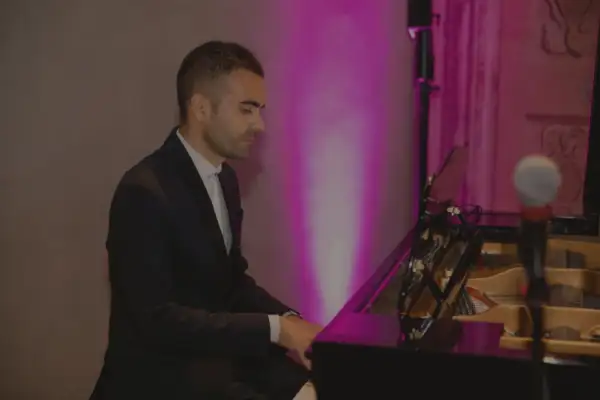
PIANO AND FEMALE VOICE
The best live music, full of joy and class
Over 500 high-quality events, always organised with elegance and professionalism
from €400 to €1,800
Guide for venues, clubs and restaurants
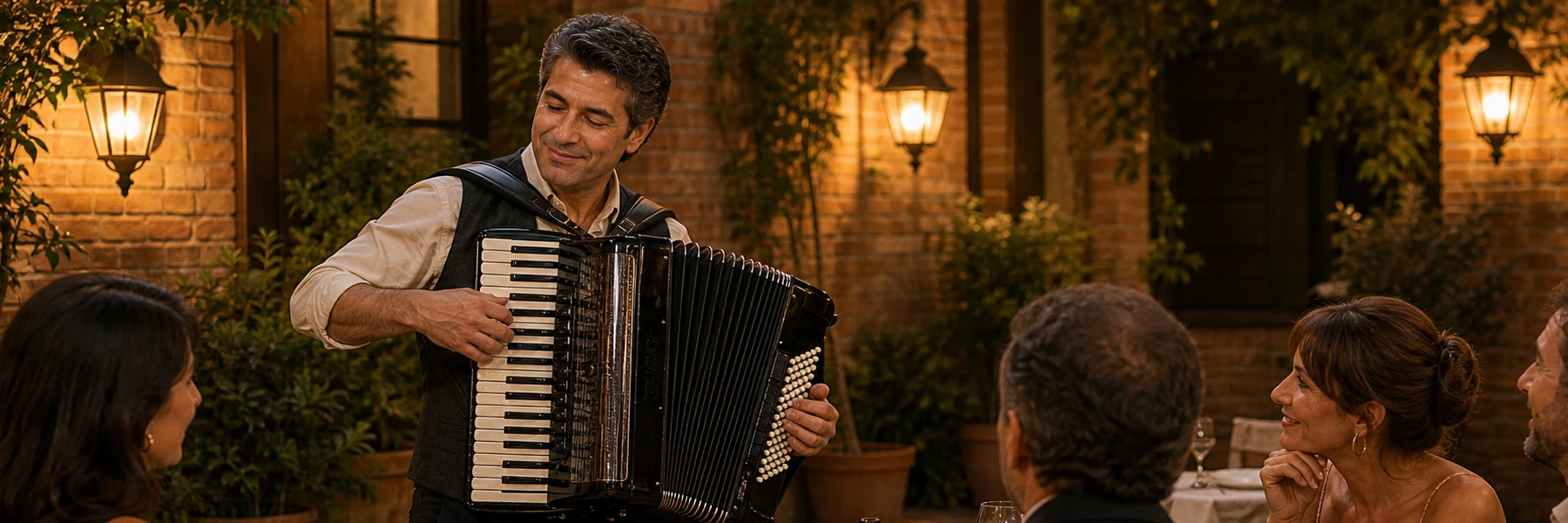
The Live music for venues and restaurants It can give warmth, identity and reason to return, but it only works when it respects the place. A band too present can cover the service; a musician too weak may seem to be decoration; a piano bar out of tone can turn dinner into a confused evening. The choice must start from the kitchen, average price, timetable, capacity, acoustics, audience and commercial goal: to retain, make dance, accompany, create an appointment or enhance a special evening without disturbing those who came to be well. The best live music does not invade the place: it gives it body, memory and a presence that guests associate with the place.
Programming live music in a club It means deciding how guests will change their stay. In a restaurant it can make dinner warmer and longer; in a bar it can give identity to the aperitif; in a club it can open the evening before the DJ part; in a pub it can create weekly appointment. Before the quote define day, time slot, customers, average spending, space, maximum volume, tables involved and expected result. Live music is useful when supporting the local model, not when it contradicts it.
A band for a club brings energy, requires space and can become the center of the evening; i musicians for a restaurant they often have to work with measurement, elegant repertoire and controlled volume; piano bar can accompany, sing, engage and change tone gradually. Do not choose only according to the musical genre. Ask organic, instruments, repertoire, possibility to reduce volume, experience in similar rooms and ability to work while staff serve. The right training is the one that enters the local without forcing it.
In concerts for clubs and restaurants, volume and acoustics can make the difference between value and annoyance. Battery, winds, amplification, reverb, neighboring tables, open kitchen, terrace and neighborhood must be evaluated first. We also need musical permits, clear times and arrangements on who compiles any required documents. Ask if the artists have their own installation, if they accept limitations, if they can sound acoustic or semiacoustic and how they manage breaks and requests. A good live performance begins before the first track.
In the quote for live music in a room training, duration, number of sets, breaks, repertoire, songs on request, arrival, audio test, system, microphones, lights, required space, current, assembly, disassembly, transfer, food if necessary, music permits, volume limits, extra hours and technical responsibility. Ask also for promotional material, conditions for more dates and replacement in case of impediment. The price must be compared on the full service, not on the only number of musicians.
When you want warmth and identity without covering conversations, service and tale of dishes.
When the room must look more alive, recognizable and capable of holding the guests.
When you want a recurring programming that the audience can remember and wait.
Yes, if it is proportionate to the room, kitchen, average price and conversation. In many restaurants, soloists, duo, light jazz, acoustic or discreet piano bar work better than very energetic bands.
The band gives more impact and can become an event; the single musician is more agile, less bulky and often more suitable for dinner and aperitif. The choice depends on space, volume and goal.
Better reason for sets and breaks. Two or three well placed sets can work better than a continuous presence that tires room and staff.
It must be decided first. Organic count, instruments, installation, venue, acoustics and neighborhood. If the room has strict limits, we need light formations or precise technical control.
Often yes. Management depends on the type of event, music, local and applicable legislation. It is prudent to clarify first who requires permissions, who compiles documents and what costs are included.
Depends. Some rooms have internal system, others do not. The estimate must specify system, microphones, lights, audio testing and technical responsibility.
It can increase the time spent and perception of the local, but only if costs, public and proposal are consistent. A full but not sustainable evening economically is not a good model.
Training, duration, set, repertoire, arrival, audio test, system, microphones, lights, space, current, permits, transfers, extras, promotional materials and responsibility.