The Sign of Jazz
MUSICAL ENSEMBLES FOR EVENTS
Jazz-inspired elegance for bespoke events
Since 2011, he has been booking artists and bands for weddings, festivals and clubs.
from €360 to €1,500
Specific request for venues, clubs and restaurants
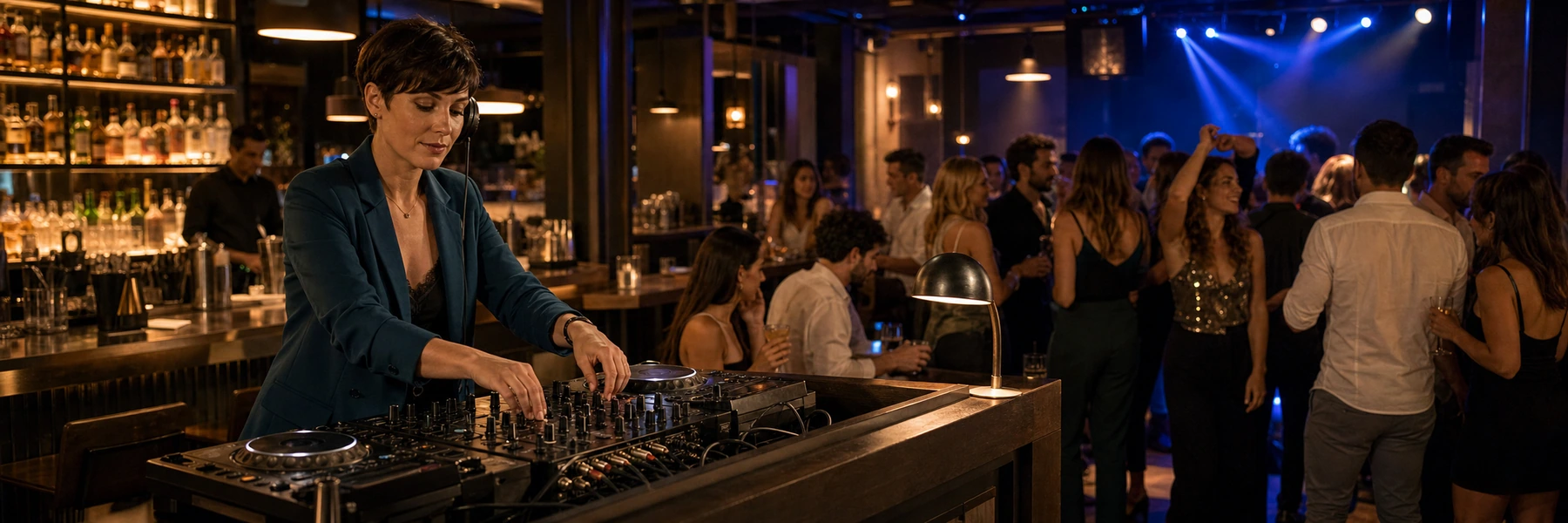
A DJ for a club It is not just someone who puts music: it is a presence that can give rhythm to the room, accompany the counter, grow the dance floor and close the evening without emptying it badly. Club, in a disco bar, in a cocktail bar or in an evening space, the DJ must read entrances, consumptions, age, time, density of the room and response of the audience. It also affects reputation, return of customers and story of the evening. If it starts too loud it burns the wait; if it stays too cautious it does not create desire. The right DJ doesn't chase the public: he listens to him, carries him forward and makes every change of energy seem natural.
Choosing a DJ for a club It means entrusting the way the evening takes shape to someone. Music must welcome those who enter, not frighten them; it must support the bench, not cover it; it must grow the dance floor when the audience is ready, not when the DJ wants to prove something. Before the budget clear up type of room, target, capacity, peak time, average spending, music style allowed and border between background, dance and evening openly musical. The same technique produces opposite results if the context changes.
A DJ for a club or night bar It must be able to work for stages. It is convenient to build atmosphere and leave room; when the room is filled it can increase rhythm, recognizability and pressure; in the final part it must close without creating sudden falls or pushing beyond what the local can support. Ask how it sets the first hours, how it handles requests, dedications, regular guests and empty moments. An experienced DJ does not play the same evening from the beginning to the end: give the room time to become public.
In the work of a DJ for premises, volume and system are commercial choices as well as technical. Too strong boxes let out those who want to stay; poorly distributed bass disturb tables and neighborhood; a console badly broke passages and service. Check if the DJ uses the internal system or brings its own, which connections are needed, if you need microphone and lights, where the staff passes, who controls acoustic limits and who intervenes if the volume is correct. The best sound is that that makes the room work better.
In the quote for a DJ in a room The duration, time, arrival, preparation, consoles, system, microphone, lights, genres, orientation running order, audience requests, promotional material, music permissions, volume limits, extra hours, replacement in case of impediment and technical responsibility. Ask whether the DJ is available for recurring evenings, if it can change repertoire over time and if it knows the needs of a room open to the public. A useful collaboration must be able to last, not only one evening.
When you want to turn your stay into movement and give the room progressive growth.
When music and rhythm must support the staff's consumptions, passages and work.
When the venue must be recognizable for sound, audience and recurring appointment.
It must read room, audience, time, bank and track. It is not enough to mix well: it must understand when to welcome, when to grow energy, when to accompany and when to close without ruining the experience.
Yes. In the club the audience enters and goes out, consumes, changes mood and has not always chosen music as the main reason. The DJ must work with flow, not with a closed group.
Only if its audience and style are consistent with the local. A name known but out of context can attract wrong people or create expectations that the local does not want to support.
It must be decided first. The DJ must respect the instructions of the manager, acoustic limits and neighborhood; the local must have a clear contact to ask for corrections without discussion during the evening.
Depends on the room's equipment. If the interior is suitable, the console can be sufficient; if it is not, speakers, microphones or lights are needed.
Choose a credible day, communicate well, start with proportionate energy and do not immediately expect the full track. The DJ must build time spent, not force dance in front of a cold room.
Yes, and often better. The recurring evenings allow to build identity, usual audience and more mature ladders. However, variable repertoire and economic conditions must be agreed.
Duration, time, arrival, preparation, consoles, system, microphone, lights, genres, promotion, permits, volume, extra, technical responsibility and replacement.